
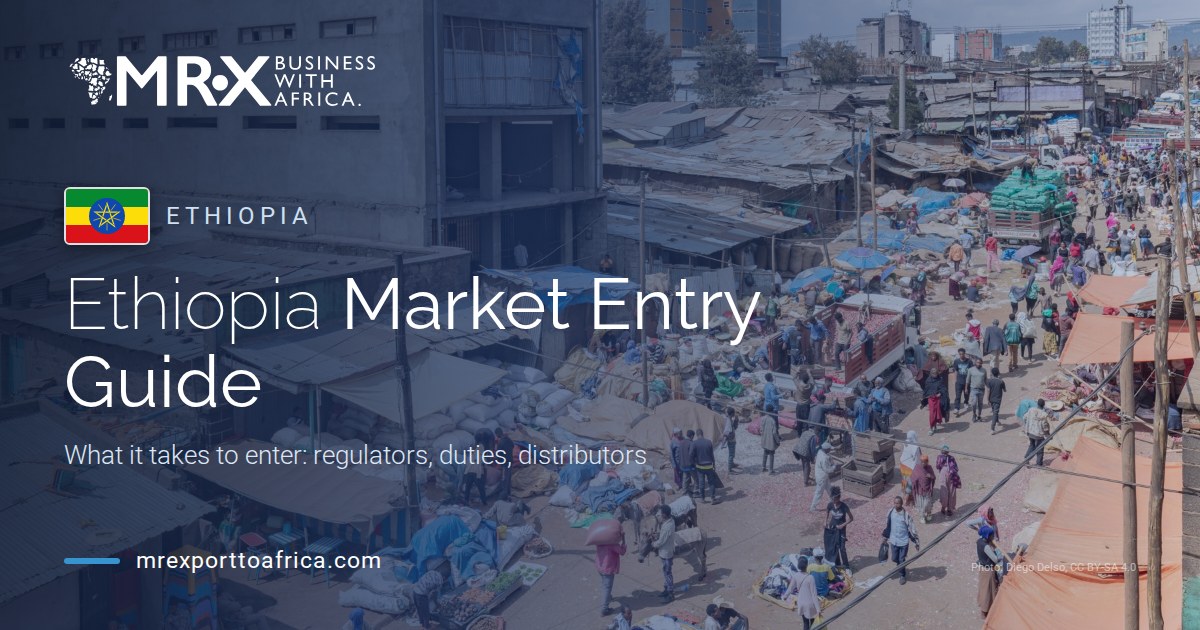
Entering Ethiopia takes a licensed Addis Ababa importer whose bank opens letters of credit, a pre-shipment Certificate of Conformity for regulated goods, and dollar quotes with short validity priced delivered to Addis via Djibouti.
If you crossed Ethiopia off your list, it was almost certainly for one reason: you could not get your money out. That reason is the thing that changed.
Meanwhile the market never got smaller. This guide covers what the reforms actually changed, who you sell to, and the mechanics we check before recommending Ethiopia to a manufacturer looking for a distributor.
What changed
In July 2024 the National Bank ended fifty years of a state-set exchange rate and let the birr trade. In May 2026 it went further. Banks can now approve letters of credit and cash against documents without asking the central bank first, and foreign exchange approvals have been pushed down to the banks.
The queue that made Ethiopia untouchable is not what it was. For an exporter, that turns Ethiopia from a market you watched into a market you can quote.
| Date | Change |
|---|---|
| July 2024 | National Bank ended fifty years of a state-set exchange rate and let the birr trade |
| May 2026 | Banks can approve letters of credit and cash against documents without asking the central bank first; foreign exchange approvals pushed down to the banks |
Why Ethiopia
Around 130 million people, second only to Nigeria in Africa, growing near 8 percent a year on construction, services and household spending.
China supplies roughly a third of what Ethiopia imports. Machinery, electricals, vehicles, steel, plastics.
That is the shelf you are competing for, and it is defended on price, not on quality. A manufacturer with a quality or reliability argument has room to make it.
Who you actually sell to
Addis Ababa, and in practice only Addis.
Importers and trading houses. Ahadu has been Unilever's key distributor here for a decade. East African Holding has been trading since 1891 and imports at scale.
Green Palm has thirty years in food importing. Alfarag runs retail and trading.
Retail. Modern retail barely exists. A handful of chains, Shoa and Safeway among them, nearly all inside the capital. General trade is the market, and the importer is the whole route.
| Company | Type | Detail from the guide |
|---|---|---|
| Ahadu | Importer | Unilever's key distributor here for a decade |
| East African Holding | Trading house | Trading since 1891; imports at scale |
| Green Palm | Food importer | Thirty years in food importing |
| Alfarag | Retail and trading | Runs retail and trading |
| Shoa, Safeway | Retail chains | A handful of chains, nearly all inside the capital |
The opening nobody has noticed yet
Ethiopia has opened wholesale trade to foreign companies, fertiliser aside. You can now legally import and wholesale here in your own name.
You still probably should not. A licence is not a route to market.
It does not give you the shops, the shelf relationships, or anyone who can collect the money. Use the opening as leverage in the partner conversation, not as a substitute for a partner.
Before you quote
Trade licence. Your importer needs a trade licence, issued through the Ministry of Trade and now handled by regional bureaus.
Certificate of Conformity. Regulated goods, electrical and electronic equipment included, need a Certificate of Conformity issued in your country before shipment. Sort it before you quote, not after you load.
Getting paid
Be precise about what the reform did. It fixed access. It did not fix price.
The birr has kept sliding since the float and inflation is still near double digits, so your buyer's costs move under them between order and arrival. The mechanics that handle it:
- Quote in dollars and keep validity short.
- Expect a letter of credit rather than open terms early on.
- Price the inland leg. Ethiopia is landlocked and nearly all of it comes through Djibouti. Price the leg to Addis, because your buyer already has.
What to ask before you sign
- Do you hold a current trade licence for our category? It is the first gate, and without it nothing moves.
- Which bank opens your letters of credit, and how many did you open last quarter? The answer tells you whether your payments will move.
- Which brands do you import today? Established Addis houses carry international principals; ask to speak to two of them.
- How do you handle the birr moving between order and arrival? A partner who expects short validity and dollar quotes has done this before.
The mistakes that cost exporters their first year
- Still judging Ethiopia by the foreign exchange queue that existed before the July 2024 float.
- Assuming the reform stabilised the birr, and quoting long validity in local terms.
- Using the new wholesale opening to go it alone, without shops, shelf relationships or collections.
- Shipping electrical or other regulated goods without the pre-shipment Certificate of Conformity.
- Pricing to Djibouti and leaving the inland leg for the buyer to discover.
How MRX supports Ethiopia entry
MRX runs market entry for exporters across Sub-Saharan Africa, Ethiopia included, with delivery managed from Athens and Zambia. For Ethiopia we confirm the conformity and licence path for your product, build a price delivered to Addis, shortlist and vet licensed importers, with the ones who actually pay marked, and support negotiation through to first orders. The first move: one Addis importer who holds a licence and has a bank that opens letters of credit without drama.
Ask how many they opened last quarter. The answer tells you everything.
Entry steps
- Confirm the conformity and licence path for your product.
- Build a price delivered to Addis, including the inland leg from Djibouti.
- Shortlist and vet licensed importers.
- Appoint one Addis importer who holds a licence and has a bank that opens letters of credit; ask how many they opened last quarter.
Frequently asked questions
Can exporters get paid from Ethiopia now?
Access has improved materially. The birr was floated in July 2024, and since May 2026 banks can approve letters of credit and cash against documents without prior central bank approval. The birr still slides, so quote in dollars with short validity and expect a letter of credit early on.
Can a foreign company import and wholesale in Ethiopia?
Ethiopia has opened wholesale trade to foreign companies, fertiliser aside. A licence is not a route to market, though, so most manufacturers are still better served by a licensed Ethiopian importer.
Do goods exported to Ethiopia need a Certificate of Conformity?
Regulated goods, including electrical and electronic equipment, need a Certificate of Conformity issued in the country of origin before shipment.
Where should distribution in Ethiopia be based?
Addis Ababa. Modern retail is minimal and concentrated in the capital, general trade is the market, and the importer is the route. Goods arrive through Djibouti, so price the inland leg to Addis.
What trade licence does an Ethiopian importer need?
Your importer needs a trade licence, issued through the Ministry of Trade and now handled by regional bureaus. Without it nothing moves.